We have two exciting upcoming events in October. Check out the World Menopause Day Celebration…
PTFW Book Club Reflections
On May 19, 2026, Prime Time for Women Book Club members gathered at Café Roma to discuss Prairie Fires: The American Dreams of Laura Ingalls Wilder by Caroline Fraser.
We enjoyed exploring the life of Laura Ingalls Wilder, author of Little House in the Big Woods and eight additional books inspired by her experiences growing up on the American prairie. Her stories have captivated millions of children in America and around the world. Ironically, Fraser’s biography reveals how Laura’s real-life experiences challenge the very American pioneer myth that her books helped create. We also learned that the television series Little House on the Prairie was a far cry from Laura’s actual story. Caroline Fraser pulls no punches in her critique of Michael Landon, the show’s producer and star (let’s just say Wild Turkey whiskey enters the conversation!).
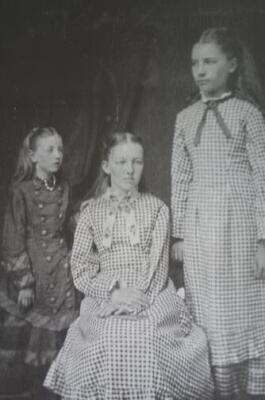
1879 Sisters: Carrie, Mary and Laura Ingalls
Laura’s life offers a fascinating window into the settlement of the Dakota Territory and the immense hardships faced by early settlers, including environmental disasters and relentless poverty. It was the constant threat of poverty that shaped much of Laura’s outlook and behavior throughout her life. Many Book Club members shared stories of parents and grandparents who survived the Great Depression or arrived in the United States as impoverished immigrants. Even after achieving financial security, many of these relatives continued to save every scrap, guard their food, reuse plastic containers, and insist that everyone “clean their plate.” Laura and her daughter, Rose, never fully escaped their fear of poverty and homelessness.
Members were particularly intrigued and often confounded—by Laura and Rose’s evolving political views. Influenced by the libertarian philosophies of Ayn Rand and others, they came to oppose many government assistance programs. During a time when Americans were struggling through the Great Depression, the Dust Bowl, crop failures, and westward migration, Laura and Rose criticized the New Deal and similar programs as handouts. As one Book Club member aptly observed, “It’s actually physically impossible to pull yourself up by your own bootstraps!”
No discussion of Laura’s life would be complete without examining the complex relationship she shared with her daughter, Rose Wilder Lane. Their lives were deeply intertwined. Rose was, at various times, a bully, a devoted supporter of her mother’s writing career, and financially irresponsible. She struggled to maintain lasting romantic relationships and often blurred the lines between journalism and fiction in her own writing. Laura spent much of her life supporting and protecting Rose, who appeared to struggle with mental illness from young adulthood onward.
Book Club members also reflected on how early trauma can shape a person’s life. When Rose was just three years old, the family experienced a devastating house fire, and Laura carried guilt about the event for years. Rose endured multiple moves during her childhood, including one forced relocation after a windstorm destroyed ten acres of trees on the family’s claim. At another point, the family’s life savings temporarily disappeared. Such experiences likely contributed to the instability that followed Rose throughout her life. She repeatedly built homes she could never settle into and earned money she was unable to keep, often spending impulsively during manic episodes.
Several members shared that biographies and memoirs are among their favorite genres. For me, biographies like Prairie Fires remind us that people are often complex, contradictory, and deeply shaped by the circumstances they endure. I find inspiration in learning how others navigated adversity and appreciate the insights their journeys offer. Some of my favorite memoirs include Personal History by Katharine Graham, Madam Secretary by Madeleine Albright, and The Year of Magical Thinking by Joan Didion.

Related Posts