We have two exciting upcoming events in October. Check out the World Menopause Day Celebration…

Balance Is Something You Create
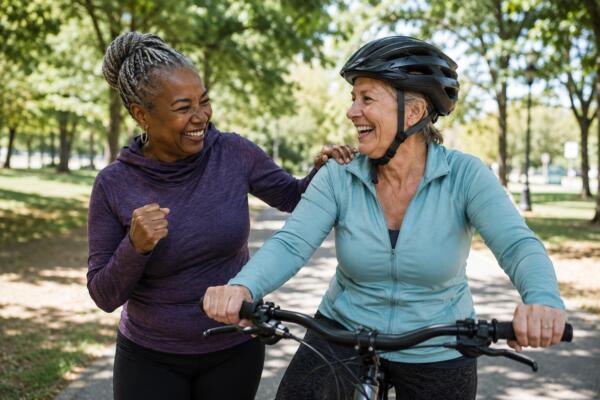
The world-renowned Albert Einstein said, “Life is like riding a bicycle. To keep your balance, you must keep moving.” As I often remind my family and friends (who might be a bit tired of hearing it by now!), I like to flip that wisdom: “To keep moving, you have to have good balance.” As we age, balancing on one foot for 10 seconds becomes an important predictor of longevity, indicating that balance is as crucial as aerobic fitness for long-term health.
A strong sense of balance gives us something priceless: confidence. Confidence to walk into a new season of life, travel, garden, dance at weddings, chase grandchildren, and simply move through the day with ease. As we grow older, balance becomes about much more than avoiding falls — it’s about protecting our independence and continuing to live life fully and joyfully.
Why Balance Matters More Than Ever
Balance is your body’s remarkable ability to keep you steady whether you’re standing still or moving through the world. There are actually two kinds of balance working together every day:
- Static balance helps you stay upright while standing still.
- Dynamic balance helps you react and adjust while walking, turning, climbing stairs, or reaching for something.
Together, they keep your center of gravity stable so you can move confidently and safely.
What many women don’t realize is that balance depends on several systems working in harmony:
- Your brain and nervous system
- Your inner ear
- Your eyesight
- Tiny sensory nerves throughout your body that help you sense position and movement
When one part weakens — whether from aging, inactivity, poor posture, vertigo or muscle loss — balance can begin to feel less reliable. The good news? Balance can absolutely be improved at any age.
Several years ago, I was diagnosed with benign positional vertigo. As the doctor explained it, from time to time, the crystals in my inner ear get lose, which results in dizziness. I guess that was a lot nicer than saying I have rocks in my head! When the vertigo gets bad, I go to physical therapy which is very helpful. And in between bouts I do two simple exercises to strengthen my ability to balance:
- The Toothbrush Stand: My electric toothbrush buzzes every 30 for two minutes. While brushing my teeth at night I alternate standing on one foot and then the other for 30 seconds until my toothbrush buzzes. Don’t worry, I DO brush my teeth in the morning but for some reason I never stand on one foot!
- The Floor Rise: I gently lower myself to the floor into a seated position, then stand back up without using any support. I will admit, some days this is much easier than others!
The Hidden Power of Good Posture
Take a moment to notice how you stand. Are your shoulders rounded forward? Is your head jutting out slightly? Years of slouching, sitting, or carrying stress in the body can gradually pull us out of alignment.
Your spine is naturally curved in a gentle “S” shape, designed to support movement and flexibility. Everyone trips…it’s part of life. But when posture shifts too far forward or unevenly to one side, it becomes harder for your body to recover quickly if you trip or lose footing.
Tight muscles also play a role. As muscles shorten with age or inactivity, your range of motion decreases, making movement feel stiffer and less graceful. Simple stretching and posture awareness can make a surprising difference — not only in balance, but also in energy, breathing, and confidence.
Strength Is the Secret Ingredient
Strong muscles are one of the greatest gifts you can give yourself as you age. Your “core” muscles — including the abdomen, back, hips, pelvis, and glutes — act like your body’s natural support system. They help you stay upright and make the tiny adjustments needed to keep from swaying or stumbling.
Lower leg strength matters too. Those muscles quietly work every second you stand, helping stabilize you and keep you grounded.
The wonderful thing is that you don’t need intense workouts to improve balance. Gentle, consistent movement is incredibly effective.
Small Daily Habits That Improve Balance
Here are a few posture reminders you can practice throughout the day, ideally in front of a mirror:
- Keep your chin parallel to the floor
- Relax your shoulders down and back
- Align your ears over your shoulders
- Maintain a natural spine — no excessive arching or slouching
- Engage your abdominal muscles gently
- Keep hips level
- Point knees and feet straight ahead
These tiny adjustments help retrain the body and improve stability over time.
Living Fully Means Staying Steady
Improving balance isn’t about limitation — it’s about freedom. Freedom to keep doing the things you love with strength and confidence. Whether it’s walking with friends, exploring new places, tending your garden, or simply feeling secure moving through your home, balance supports every part of an active, vibrant life.
And perhaps most importantly, working on balance is an act of self-care. It’s a way of honoring your body and investing in the years ahead. Because living life to the fullest doesn’t stop with age — in many ways, it’s just getting started!

Related Posts